

For many, joining the military is an easy decision. It can be a clear path to serving your country, learning valuable skills or opening the door to higher education through the GI Bill. Leaving the military and transitioning to a civilian career, though, is not always that simple.
When Jay Hernandez ’17 separated from the military after more than eight years in the U.S. Air Force, his initial experience was surprisingly effortless.
“I got out of the military on a Friday, and on Monday I came to work in civilian clothes and was essentially doing the same thing,” he says. “It was perfect.”
That all changed when he and his wife decided to move to Texas to be closer to family.
Unexpected Obstacles
Hernandez had just completed his bachelor’s degree in public affairs. Bolstered by the success of his first post-military job, he expected his career search to go just as smoothly in Texas, but the opposite happened.

After working as a military journalist and earning his degree, Hernandez had expertise, experience, and a range of marketable skills, but he struggled to find the right position. In fact, he applied for nearly 200 jobs and attended job fairs to follow up face-to-face with organizations where he wanted to work. Disappointed, he would watch as his resume got added to the stack on the table.
“I felt like I was making an extra effort and not getting looked at,” he admits.
When he did get a nibble from a major bank, he was discouraged to learn they could only offer him an entry-level teller job.
“Certainly, what I was looking for was a position where I could maximize all of the experience I had,” he explains. “I wasn’t looking to restart a career from square one.”
Catching a Break
He finally found a municipal job through volunteer work he had been doing for an animal shelter. It was a public relations position that aligned well with his experience, but he quickly learned that the reality of working for a city meant he had much more work to complete with a very limited budget.
“I would show up at 7 a.m. and leave at 9 p.m. and still be behind,” he notes.
Fortunately, his next position was a much better fit for him.
“I eventually got a job at Bell Helicopter, and it was a phenomenal role,” he says. “It took advantage of the skills I had, and I was directly working with senior leaders. I was truly their PR advisor on things.”
Bell Helicopter also had a strong veteran community, and Hernandez quickly got involved in the veteran employee resource group and became a member of the company’s corporate giving board. All the stars had aligned.
“I was in a corporate role that was taking advantage of my skills, I got to be involved in the veterans group, and I also got to give back to the local community,” he says.

Bringing Veteran CEO Magazine to Life
At Bell, Hernandez worked with many veterans, and he came to learn that his career transition struggles were not unique. Since he collaborated with many senior leaders with military backgrounds, he began to ask them for their advice.
That led to panel sessions where veteran leaders would share stories of how they advanced in their own civilian careers. Hernandez was fascinated by their journeys and knew their experiences could help others, so he began writing recurring pieces on the subject.
“Through doing that, the idea for a magazine started to germinate,” he says. “I wanted to figure out how I could share this story not just with Bell employees but with a larger audience.”
Hernandez began interviewing other veteran business executives about their experience transitioning out of the military.
“The next thing I knew, I had eight stories put together and thought how do I package it?” he explains.

He decided to establish a publication and call it Veteran CEO Magazine. He worked on the articles, design, printing, and website on the side while maintaining his role at Bell.
“After the publication and website went live, that’s when the momentum picked up,” he said. “I actually had something that could take all my attention to do.”
He recently left Bell to work full time on Veteran CEO Magazine. This annual publication, which is released on Veterans Day, offers readers executive insights they won’t find anywhere else, real-world advice, and access to a supportive community. The goal? To help veterans just like him navigate post-military life and build a career with purpose.
His Best Career Transition Advice
Throughout his interviews, some themes have emerged. This first is that transitioning out of the military is universally challenging, in part because people grow and change during their service.
“Every executive talked about how the journey was intimidating for them,” notes Hernandez, even the ones with multiple active-duty tours under their belt.
That’s because they had to shift from the military where there are clear missions, objectives, and exit plans to the ambiguity of the future. In order to gain clarity, they needed to get to know themselves.
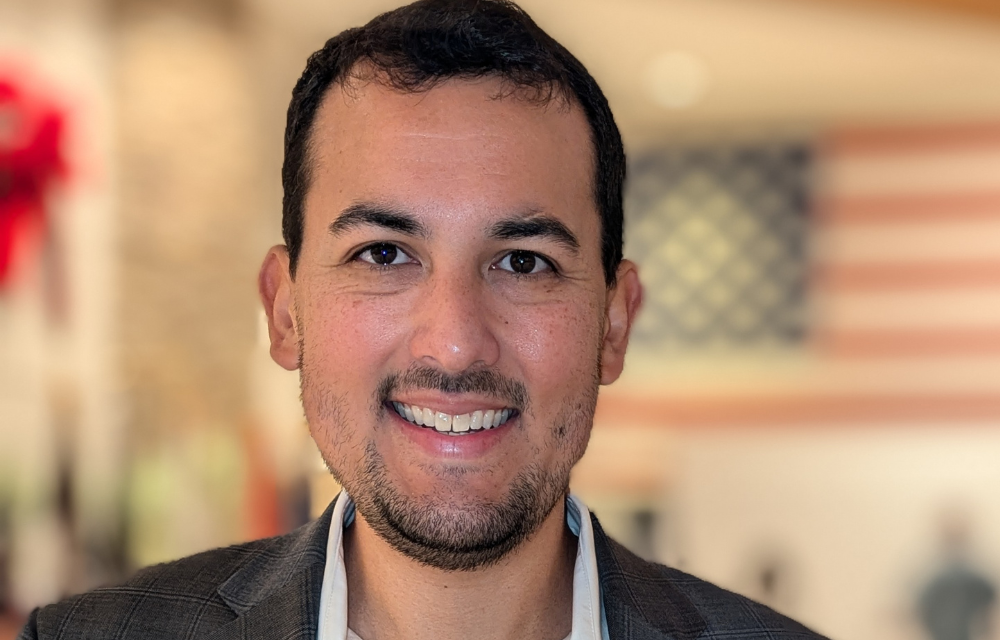
Jay Hernandez '17 Founder, Veterans CEO Magazine
Hernandez is heartened to hear again and again that this effort paid off.
“All of the stories I hear transition to stories of success,” he concludes.
Learn more about career resources provided to UMGC alumni.
Read more alumni news.